Menu
Log in

PAAW is dedicated to healthy, sustainable ambulance and emergency medical service delivery in WIsconsin

Log in

News

  • Wednesday, May 17, 2017 8:19 AM | PAAW Administrator (Administrator)

    The children outside are curious, playing but in a sense of studied nonchalance. Not that any of them look old enough to know the nuance of the word, but innate in them as in all of us lays the gist of the word’s implication

    The fire apparatus is already curbside ahead of us, lights silently announcing to anyone watching that activity is happening within this building, this day. My partner takes the cardiac monitor from me and I keep the jump bag over my right shoulder. Dropping their pretense of play, the children fall still, openly checking out our accoutrements. One brave boy calls out, “hey, whatcha got there? What’s that big bag for?” My partner returns, “helping people”. Simplified, yet valid.

    Inside, a middle aged man with an air of importance around him meets us, gives us a short layman’s report.  It is remarkably succinct, and with nearly all necessary components I could’ve asked for if making a list. We continue on in the direction indicated, where ahead a small group of people can be seen gathered in the cafeteria. It’s after hours, at this school, and yet the gathering is modest. I see fire ahead, and a slight woman with grey hair barely visible in the middle of the navy shirts, suspenders attached to turnout pants, and male muscles.

    I greet the lieutenant by name and make my way around the far end of the cafeteria tables arranged in neat rows. The patient has the gathering of firemen around her as well as a couple elderly ladies and amidst all of these, a few more assorted small humans, watching with grave interest. The lieutenant was a new fireman when I was a new medic and he gives report after greeting me by name.

    “Patient was getting up, caught her sneaker” <I remember thinking, “Jimmy said sneaker, who says sneaker? Have to tease him later on at some point”>  “on the bench and fell, hitting her head. She did lose consciousness. Her blood pressure is low; she was very pale when we got here. Her heart rate is very slow, blood sugar is 92.”

    >> Click to read more of the story...
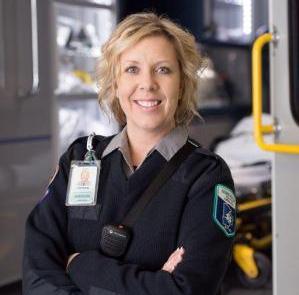
    "Standby for Tones" is a blog written by Crystal Wallin, a La Crosse paramedic.  Her stories, written from real life events, bring to light the human experience in having an EMS career and work life. 

    >> Click to read Crystal's blog.
  • Wednesday, May 17, 2017 7:59 AM | PAAW Administrator (Administrator)


    The Wisconsin EMS Advisory Board Subcommittees are formed to address specific areas and develop recommendations.  There are four subcommittees that meet regularly in Madison during EMS Advisory Board meetings.

    The sub-committees include:

    EMS System Quality and Data

    EMS Education and Training

    EMS Systems Development and Management

    EMS Physician Advisory Group

    If interested to serve on a sub-committee an application is required.  The deadline to apply is noon on Friday, May 26. Elections will take place at the June 7 EMS Board meeting.

    >> Click to download the memo regarding the application process.

    Direct any questions to the Wisconsin EMS office at 608-266-1568 or dhsemssmail@wisconsin.gov.

  • Wednesday, May 17, 2017 7:33 AM | PAAW Administrator (Administrator)
    National EMS Week is being celebrated nationwide this year Sunday, May 21 to Saturday, May 27.  Emergency Medical Services for Children (EMSC) Day is Wednesday, May 24.

    The opportunity brings with it local awareness of emergency medical services, and quite often includes community open houses, volunteer recruitment and hiring drives, and opportunities for appreciation, recognition and goodwill.

    The 2017 theme is "EMS STRONG:  Always in Service".

    To help communities, elected officials, and stakeholders better understand EMS, NAEMT has created a new What Is EMS? informational brochure. >> Click to download brochure.

    National EMS Week was established by the American College of Emergency Physicians (ACEP), and is in partnership with the National Association of EMTs.

    For more information, go to >> http://www.emsstrong.org/.

  • Tuesday, May 09, 2017 12:00 PM | PAAW Administrator (Administrator)

    EMS Live in Wisconsin Podcast

    Ways to avoid unintended consequences in billing compliance.

    >> Click for on-demand playback and listen now!

    This podcast episode was recorded on May 9 and was dedicated to discussing Medicare Fraud, whistleblower protection and steps to reduce your False Claims Act risk. 

    Recently, Madison attorney Wendy Arends with Godfrey & Kahn authored an article involving a $12.7 million settlement in a whistleblower Medicare fraud case against MedStar Ambulance in Massachusetts.  The former billing manager was the whistleblower in this case and reported the wrongdoing.

    MedStar Ambulance is alleged to have: (1) billed for transports that were not medically reasonable and necessary; (2) billed for higher levels of services than patients’ conditions necessitated; and (3) billed for higher levels of services than were actually provided.

    Besides the MedStar case, we also discussed how to reduce an ambulance service's Fraudulent Claims Act risk with internal policy and procedures, to include policies that address:  conducting internal audits and monitoring, designating a compliance officer, a process to investigate potential violations or patient complaints, whistleblower protection, etc.  Even if your ambulance service uses a third-party billing company to process runs, code them and bill Medicare, it doesn't release you as the ambulance company from liability, compliance, completing audits and any unintended consequences that may arise.

    In addition to Wendy Arends as our guest we were also joined by Tom Tornstrom, Executive Director at Tri-State Ambulance in La Crosse, who offered some excellent points, to include Chapter 10 (Ambulance Services) of the Medicare Benefit Policy Manual that every ambulance service director should read.

    >> Click to download Wendy's article regarding the MedStar Ambulance Medicare fraud settlement case.

    >> Click to download Medicare Benefit Policy Manual - Chapter 10 (Ambulance Services).

    Don't miss a beat of the action - listen to EMS Live in Wisconsin!

    >> Click for on-demand playback and listen now!

  • Tuesday, April 25, 2017 4:25 PM | PAAW Administrator (Administrator)

    EMS Live in Wisconsin Podcast

    Successful report tied to core value of patient-centered EMS delivery

    >> Click for on-demand playback and listen now!

    What started decades ago throughout Milwaukee County EMS as a seemingly well-intended policy to divert ambulances to less crowded hospital emergency departments now represented an opportunity to realign patient-centered EMS delivery within the context of a changing health care landscape. 

    According to Milwaukee County EMS Medical Director Dr. Mario Colella, "In the era of diversion, we noticed when one hospital went on diversion other surrounding hospitals soon followed, patient satisfaction diminished and ambulances were forced to drive further away from their communities.  Most importantly, patients that were sick were denied access to the closest emergency care".

    With the phased in policy, ambulance diversion officially ended April 1, 2016, in Milwaukee County.  Now, a report has been authored on the outcomes from the policy change.  >> Click to review the report's executive summary.

    The podcast was recorded on April 25.  Guests included Milwaukee County Emergency Management Director Christine Westrich, Milwaukee County EMS Medical Director Dr. Mario Colella and Milwaukee County Emergency Management Program Director Ken Sternig.  >> Click for on-demand playback and listen now!

    The following questions were discussed:

    1. What is the history of Hospital Diversion and why is "non-diversion better?
    2. How did Milwaukee County coordinate this among paramedics, hospitals, etc.? 
    3. Did you stage the approach or go cold-turkey on the actual operations?
    4. Did the data show what you expected -- has there been any fallout or successes?
    5. What's next for the Milwaukee County EMS System?

    EMS Live in Wisconsin is broadcast live on the phone and via the internet the second and fourth Tuesday every month starting at 9:00 a.m. and typically running 30 minutes. 

    Don't miss a beat of the action - listen to EMS Live in Wisconsin.  >> Click for past show archive.
  • Wednesday, April 05, 2017 9:15 AM | PAAW Administrator (Administrator)

    State Capitol

    Bill now moves to the Senate, to hold public hearing soon.

    The Community Paramedicine Bill, >> AB151, received unanimous vote of approval by the full Assembly at the State Capitol on April 4.  Assembly Amendment 1 was adopted and passed.  >> Review Community Paramedicine Bill -
    Assembly Amendment 1.

    During the Assembly's Committee on Health public hearing on March 22, Dana Sechler, EMS director at the Baraboo District Ambulance Service, said "Community EMS fills the "gaps or voids where there is a need.  Their efforts can help hospitals avoid penalties for re-admissions". 

    Captain Michael Wright of the Milwaukee Fire Department shared with members of the Assembly's Committee on Health that he helped develop the city's community paramedic program three years ago.  The department, which has about 30 trained paramedics, focuses not only on preventing re-admissions, but also to help those who frequent emergency rooms for their healthc
    are. The program is funded by the city of Milwaukee.   He said the program was needed because "there's so many gaps."
     
    Captain Wright, photo insert, stated during the public hearing, "For eighteen years, I've been responding to people and knowing that they needed more. They weren't getting it from the hospitals, they weren't getting it from the doctors. They couldn't get it from us because we don't have time. The program helps provide that care, he said".

    According to PAAW Lobbyist Michael Brozek, "This is a very, very fast tracked piece of legislation...unusually fast."

    Minnesota Ambulance Association Lobbyist Buck McAlpin also shared on news about the Assembly's vote, "Very few states have formalized this
    (Community Paramedicine) into law - a very nice win."  McAlpin was instrumental in Minnesota passing Community Paramedicine legislation in 2011.

    Now, the bill heads to the Senate.  The companion bill in the Senate is known as >> SB149 It was read for the first time before the full Senate on March 29, and then referred to the Committee on Health and Human Services for a public hearing.

  • Monday, April 03, 2017 9:30 AM | PAAW Administrator (Administrator)

    State Capitol

    Senate to hold first public hearing on Thursday, April 6.


    The Community Paramedicine Bill received a public hearing on March 22 and unanimous vote of approval on March 29 from the Assembly's Committee on Health.  Now, the bill goes before the full Assembly at the State Capitol and is scheduled for a vote on Tuesday, April 4. 
    The bill is known as AB151 and is sponsored by Rep. Amy Loudenbeck.

    It is anticipated the Assembly will vote in favor of the Community Paramedicine Bill.  The companion bill in the Senate, known as SB24, is tentatively scheduled for a public hearing in the Senate on Thursday, April 6.  >> Click to download Senate Community Paramedicine Bill SB149.


    Recent Podcast on Community Paramedicine

    >> Click to listen now.

    This EMS Live in Wisconsin podcast was recorded on Tuesday, March 28, and was dedicated to Community Paramedicine.  Guests included Minnesota Ambulance Association Legislative Lobbyist Buck McAlpin and PAAW President Patrick Ryan.  >> Download the podcast at http://tobtr.com/9900319.

    Community Paramedic Training Program - Offered by the University of Wisconsin - Milwaukee

    Using the North Central EMS Curriculum, a Community Paramedic Program is offered through the University of Wisconsin - Milwaukee.  The program provides all required content for the Community Paramedic including:

    • Core content specific to the Role of the Community Paramedic
    • Content specific to Community and Public Health
    • Cultural Competency Community Assessment
    • Chronic Disease Assessment, Teaching and Management

    For more information >> click here or contact Dr. Kim Litwack, Program Director at 414-229-4189 or email litwack@uwm.edu.

  • Monday, March 27, 2017 11:35 AM | PAAW Administrator (Administrator)

    State Legislation

    Following a public hearing on March 22 at the State Capitol, the Assembly's Committee on Health called an executive session to vote on AB151, the Community Paramedicine Bill.  The executive session is scheduled for Wednesday, March 29 starting at 11:00 a.m. in room 328 Northwest at the State Capitol.  >> Click for the meeting agenda.

    The Wisconsin Department of Administration (DOA) recently released a report detailing the fiscal impact to the Department of Health (DHS) in adding an endorsement for Community EMT and Community Paramedic.  According to the report, to implement the endorsement, provide training and maintain the standard of 60 days or less to process licenses, operation plans and protocols, DHS would require one additional full-time coordinator at $80,300 GPR.  In addition, there are two minor one-time setup fees totaling $7,500.  >> Click to review the DOA fiscal estimate.

    The Community Paramedicine / Mobile Integrated Healthcare Bill is sponsored by Rep. Amy Loudenbeck.  >> Click for the Community Paramedicine Bill (AB151).

    According to PAAW President Patrick Ryan, "PAAW, along with State stakeholders have worked long and hard to get this important legislation to this point. We are optimistic about support throughout the state for the establishment of a framework for the development of Community Paramedic programs across the state".

    For current insights into what EMS Today conference attendees had to recently share about Community Paramedicine and Mobile Integrated Healthcare program ideas, click here.

    Upcoming Podcast on Community Paramedicine - Tuesday, March 28 at 9:00 a.m.

    The next EMS Live in Wisconsin podcast on Tuesday, March 28, is dedicated to Community Paramedicine.  Guests include Minnesota Ambulance Association Legislative Lobbyist Buck McAlpin and PAAW President Patrick Ryan.  Listen live by calling 646-929-1081, or on the internet at this link >> http://tobtr.com/9900319.  The program is broadcast live from 9:00 to 9:30 a.m.

    Minnesota is a leading state in Community Paramedicine, with its bill signed into law in 2011.  McAlpin was instrumental in the bill passing in Minnesota, and has consulted with PAAW and other ambulance services in Wisconsin intending to deliver Community Paramedicine in the badger state.  McAlpin's employer, North Memorial Medical Center, Brooklyn Park, Minnesota, offered a two-day class in September 2015 for Wisconsin's ambulance services and other healthcare providers to review their operation and stats, to meet those delivering out-of-hospital Community Paramedicine care, and help these organizations begin to lay the groundwork for Community Paramedicine in their own community.

  • Monday, March 27, 2017 10:36 AM | PAAW Administrator (Administrator)

    Western Wisconsin EMS News

    More than 20 St. Croix EMS emergency medical technicians could lose their jobs if the city of Hudson decides to transfer the service to the Hudson Hospital and HealthPartners.  City commissioners emphasized negotiations are still ongoing and no decision has been made.

    Lakeview Vice President of Ancillary Services Nathan Pulscher, one of HealthPartners’ representatives at the meeting, said the Hudson Hospital would use the two-paramedic model that other HealthPartners organizations do, as it has found the model to be successful. Under this model, Hudson Hospital would offer all current St. Croix EMS paramedics employment, but the model has no role for current EMTs.

    St. Croix EMS employs 24 EMTs and 12 paramedics, though some employees in both positions already work for HealthPartners as well.

    Pulscher said HealthPartners and Hudson Hospital would be willing to talk about supporting current EMTs in being trained as paramedics.

    Currently the hospital and city have not landed on an answer for who will serve as first responders to the community if the transfer is approved.

    Council Member Tom McCormick said the city is dedicated to public safety in the community. Services would still be based in Hudson.

    “We want to have a successful EMS system,” McCormick said.

    McCormick said the city has approved retention bonuses for most EMS staff that would provide incentive for workers to stay on and ensure the service can continue to operate up until the transfer point, if the transfer is approved.

    Source: Hudson Star-Observer

  • Monday, March 27, 2017 10:04 AM | PAAW Administrator (Administrator)

    Standby for Tones Blog

    They only moved here a month ago, she says. It’s quite dark outside and you can’t tell it’s foggy unless you catch a glimpse of the misty haze in the glow of the passing small town streetlights. From another part of the state, they loved the topography of the bluffs that line the mighty Mississippi in our driftless region. The coulees stretch fingers up among the gentle swells of the bluffs, and in the warmer months the surface of the water is glassy and rippling, in turns. They knew exactly where they wanted to move when they retired, and just under a month ago they made my region of Wisconsin their permanent home. When she speaks of the views she enjoys from their new home, her face lights up and she beams. The joy is incongruous in its juxtaposition next to the ecchymosis evident on her eyelid and surrounding tissues which occlude her vision on one side.

    The Badgers played awhile back and lost the game to the Gators in the last 4 seconds. She and her hubby haven’t really met anyone here yet, so they enjoyed a couple beers at home. Unused to the unfamiliar home, she stumbled in the dusk afterward and lost her footing. A retired healthcare provider, she chalked up her subsequent pain and stiffness as just a result of tumbling down some stairs. Time went by, the sun rose, she began to admit that it was more than pain and stiffness. Listening to her history of the events, I’m struck by her strength. The paperwork accompanying her lists a fracture as well as an anteriorly displaced shoulder dislocation – in the same upper extremity as the ecchymosis. A reduction attempted was unsuccessful due to some myoclonus and trismus evidenced after administration of etomidate. I’m currently transporting her to a larger facility for further care.

    >> Click to read more of the story...

    "Standby for Tones" is a blog written by Crystal Wallin, a La Crosse paramedic.  Her stories, written from real life events, bring to light the human experience in having an EMS career and work life. 

    >> Click to read Crystal's blog.

Contact Us:
admin@paaw.us

PAAW
PO Box 96503 #72319
Washington, DC 20090-6503

Powered by Wild Apricot Membership Software